

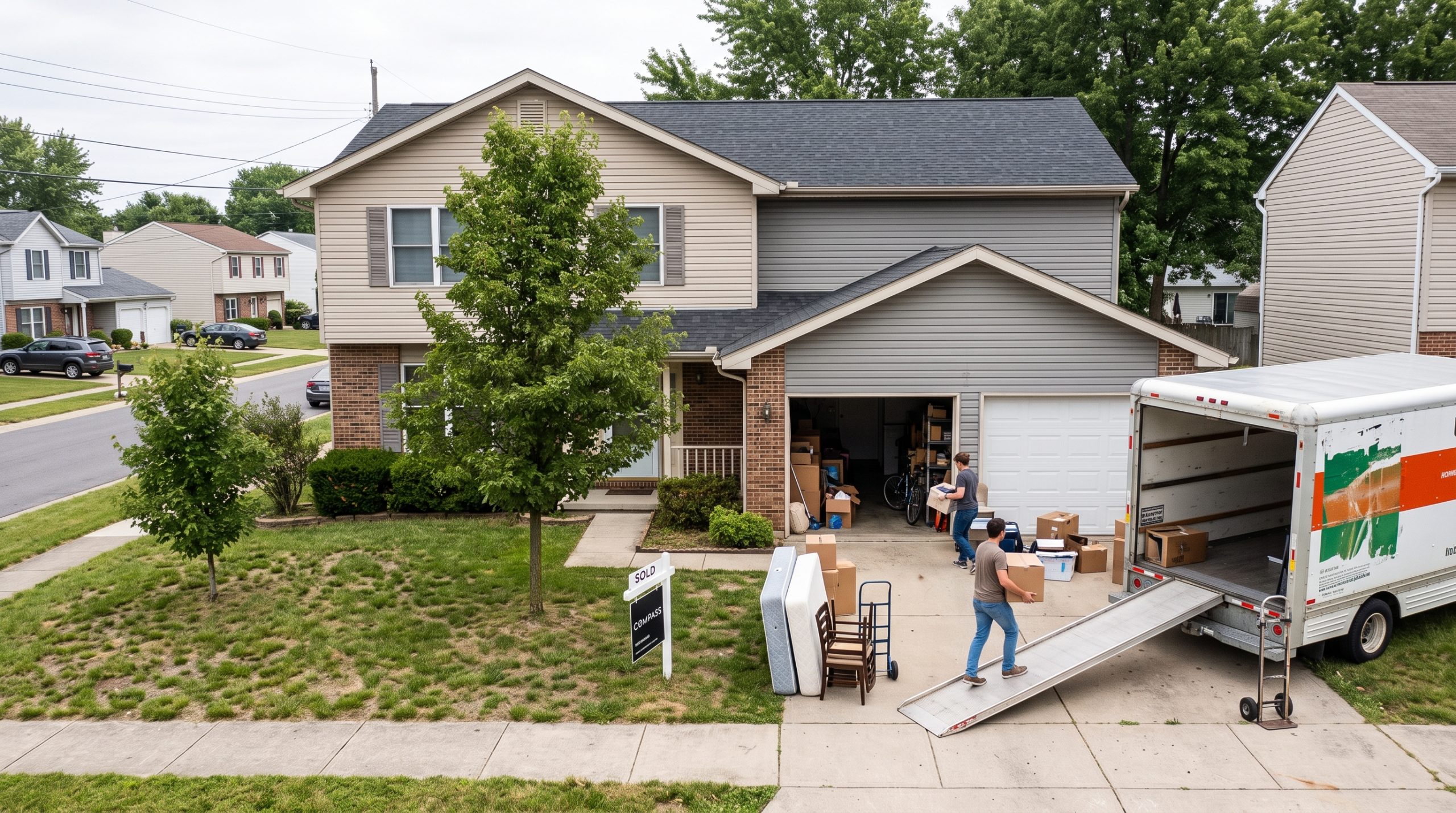
What are the biggest risks of selling my home to downsize in 2026 if I cannot find the right smaller property to move into?
The biggest risks include becoming temporarily displaced, paying costly double housing expenses, losing equity to a rising market, and feeling pressured into buying the wrong replacement home under stress.
Why This Matters for Denver Metro Downsizers Right Now
If you own a home in the South Denver Metro area and you have been thinking about downsizing, you are not alone. Many homeowners across the Denver Metro area are equity-rich after years of appreciation. The idea of cashing out, simplifying, and finding something smaller sounds straightforward, until you try to execute it.
Here is the reality I see every day as a Certified Senior Advisor and Broker Associate. The supply of quality, smaller homes that meet downsizers’ standards (single-level living, low maintenance, Cherry Creek School District proximity) is thinner than most people expect. New listings in Arapahoe County dropped from 1,172 in May 2026 to just 788 by September 2026, a roughly 33% seasonal decline, according to FRED data. That means if you sell your larger home without first securing something to move into, you could face a series of cascading financial and personal risks that many sellers do not fully appreciate until they are living them.
Let me walk you through the specific dangers so you can make a well-informed decision.
Risk One: Temporary Displacement and the Cost of Short-Term Housing in the Denver Metro
The most immediate risk is also the most stressful. If you close on your current home and have not locked in a replacement property, where do you go?
Short-term furnished rentals in the South Denver Metro area are not cheap. You may find yourself paying a significant monthly premium for temporary housing that erodes the very equity you freed up by selling. And the longer the gap stretches, the more it costs.
What I tell my clients is this: with median days on market in Arapahoe County reaching 56 days as of September 2026 (per FRED data), finding, negotiating, inspecting, and closing on the right smaller home within a tight post-sale window is genuinely difficult. That 56-day timeline means the replacement home you want today may not close for nearly two months, and that assumes you find one immediately.
The Hidden Costs That Add Up
Beyond rent, think about:
- Moving twice rather than once, doubling your moving expenses
- Storage fees for furniture and belongings that do not fit in temporary quarters
- Disruption to medical care, routines, and daily life, which matters enormously if you have established relationships with local providers in the Denver Metro area
These costs are rarely calculated upfront, and they can consume a surprising percentage of your sale proceeds.
Risk Two: Leaseback Arrangements and Bridge Loans Can Be Expensive in This Market
Some sellers try to solve the timing gap by negotiating a post-closing leaseback, essentially renting back their own home from the buyer after closing. It is a legitimate strategy, but it comes with trade-offs.
In a leaseback, the buyer sets the terms. You are paying rent on a home you no longer own, often at a rate that reflects what the buyer could earn on the open market. That monthly cost may surprise you.
Bridge loans offer another path, letting you buy a replacement property before your current home officially closes. However, these short-term financing products typically carry interest rates meaningfully higher than a standard conventional mortgage. For downsizers on fixed or semi-fixed incomes, those elevated payments can feel uncomfortable quickly.
What I consistently see is that clients underestimate how long they may need a leaseback or bridge loan. You might plan for 60 days and end up needing 120. That difference matters financially, especially when you are trying to preserve equity from a Denver Metro home that may represent decades of appreciation.
Risk Three: Buying Back into an Arapahoe County Market That Has Moved Against You
Here is the risk that keeps financially savvy downsizers up at night. You sell your larger home at a strong price, then spend three to six months searching for the right smaller property. During that gap, the market does not wait for you.
The median listing price in Arapahoe County stood at $475,000 as of September 2026, after peaking at $489,950 in June, per FRED data. If prices move upward even modestly during your search period, you may find yourself buying back into a market that has appreciated enough to partially or fully offset the equity you freed up by selling.
To be fair, today’s market is softer. Prices have been flat to slightly down, and the Colorado Association of REALTORS reports that buyers currently hold more negotiating power, which can work in your favor when you purchase. But conditions can shift quickly, and a gap of several months between your sale and your purchase leaves you exposed if they do.
This is especially acute for downsizers targeting patio homes, low-maintenance villas, and single-level detached homes in areas near the Denver Tech Center and Cherry Creek School District.
The Math That Matters
Ask yourself: if you sell for a strong price but then pay meaningfully more for your replacement home because the market moved during your gap period, did you actually come out ahead? For many Denver Metro homeowners, the answer is sobering.
Risk Four: Shrinking Fall and Winter Inventory Reduces Your Options
Timing your sale matters more than many downsizers realize. If you list your home in late summer and close in October or November, you enter the replacement-home search during the thinnest inventory period of the year.
That 33% seasonal decline in new listings across Arapahoe County (from 1,172 in May 2026 to 788 in September 2026, per FRED) is not just an abstract statistic. It means fewer options, less negotiating leverage, and a higher likelihood that the specific type of smaller home you want simply is not available when you need it.
With only 3,599 new private housing structures authorized by building permits in Arapahoe County during 2025 (the most recent annual data from the U.S. Census Bureau), the pipeline of new construction alternatives that might offer flexible closing timelines is limited relative to demand. If you are hoping a new-build community in the Denver Metro will solve your timing problem, that pipeline may not deliver what you need on your schedule.
In my experience, the best downsizing outcomes happen when clients plan their sale timing around inventory cycles, not the other way around.
Risk Five: Emotional Pressure Leading to a Regrettable Purchase Decision
This is the risk I worry about most for my clients, and it is the one that gets discussed least. When you have already sold your home and you are paying for temporary housing or a leaseback, there is an almost irresistible psychological pressure to buy the first available smaller property rather than holding out for the right one.
At 56 median days on market in September 2026 in Arapahoe County, the market is not so frantic that you must make an offer within hours. But the pressure of being “homeless” or carrying double housing costs can override rational decision-making. I have seen it happen to extremely intelligent, financially disciplined homeowners.
Strategies to Protect Yourself
- Contingent offers, where your purchase is contingent on selling your current home, can work in some situations, though not every seller will accept them in competitive segments
- Extended closing timelines negotiated upfront give you more breathing room
- Selling with a leaseback clause built into your listing from day one puts you in the driver’s seat rather than the passenger seat
- Pre-identifying two or three acceptable replacement properties before listing your home, so you have targets to pursue immediately
As someone rated 5 out of 5 stars by past clients and deeply familiar with the South Denver Metro area, what I tell every downsizer is this: the sequence and strategy matter as much as the price. Getting both right is what separates a successful transition from a stressful one.
Risk Six: Capital Gains and Rate Lock Complications
Two financial risks deserve attention even though they are often overlooked.
Capital Gains Tax Exposure
Under current IRS rules (Section 121), you may exclude up to $250,000 of gain as a single filer or $500,000 as a married couple filing jointly, provided you have lived in the home as your primary residence for at least two of the last five years. This exclusion does not require you to buy a replacement property. However, if you move into a rental for an extended period, you should track the ownership and use clock carefully for any future primary residence sale. I always recommend consulting a CPA to confirm your specific eligibility, especially if your Denver Metro home has appreciated significantly over decades.
Rate Lock Expiration
If you obtain a mortgage pre-approval or lock in an interest rate while searching for your replacement home, that lock typically runs 30 to 60 days. If you have not found the right smaller property within that window, you may need to re-lock at a potentially higher rate. For downsizers on semi-fixed incomes, even a modest rate increase can meaningfully affect monthly payments.
Frequently Asked Questions
Should I sell my home first or buy a replacement home first?
There is no universally correct answer. Selling first gives you certainty about your equity but creates displacement risk. Buying first avoids displacement but means you may carry two mortgages or need a bridge loan. The right sequence depends on your financial reserves, risk tolerance, and how competitive the smaller-home segment is when you are searching. A local agent who specializes in downsizing can help you evaluate which approach fits your situation.
How long does it typically take to find a suitable downsizer home in the South Denver Metro?
It varies widely. As of September 2026, median days on market in Arapahoe County was 56 days per FRED data, but that measures listing-to-contract time. Your personal search could take weeks or months depending on how specific your requirements are. Single-level, low-maintenance homes in desirable areas can be harder to find, and the supply of such properties is thinner than many downsizers expect, which can extend your timeline.
What is a post-closing leaseback and how does it help Denver Metro downsizers?
A leaseback lets you remain in your sold home as a renter for a negotiated period after closing. It gives you time to find and close on a replacement property without moving twice. The trade-off is that the buyer sets the rent terms, and you are paying to live in a home you no longer own. Terms are negotiable, so building this into your listing strategy from the start gives you more leverage.
Are bridge loans a good option for downsizers in this market?
Bridge loans can solve the timing gap by letting you purchase before your sale closes. However, they typically carry interest rates higher than conventional mortgages and may involve more complex qualifying requirements. For downsizers on fixed incomes, this can be financially uncomfortable. Discuss the numbers with your lender before committing.
Will I owe capital gains tax if I sell my home?
You may qualify for the Section 121 exclusion, which can shelter up to $250,000 (single) or $500,000 (married filing jointly) of gain, provided you have met the ownership and use requirements. This exclusion does not depend on purchasing a replacement home. Because individual circumstances vary, I always recommend consulting a CPA or tax professional who understands Colorado-specific considerations.
What happens if the market rises while I am searching for a smaller home?
You risk paying more for your replacement property than you anticipated. The median listing price in Arapahoe County was $475,000 as of September 2026 per FRED data. If prices appreciate during your search period, even modestly, your effective downsizing savings shrink. Planning for this possibility by building a price cushion into your budget is wise.
How does seasonal inventory affect my downsizing timeline?
Significantly. New listings in Arapahoe County dropped roughly 33% from May to September 2026, per FRED data. If you sell in late summer or fall, you are entering the replacement-home search when inventory is at its thinnest. Listing earlier in the spring or early summer gives you access to peak inventory for your replacement search.
Can I make a contingent offer on a smaller home while selling my current one?
You can, but not all sellers will accept contingent offers, especially in competitive price ranges. In segments where downsizer-friendly homes attract multiple buyers, a contingency can weaken your position. Having a strong pre-approval and an experienced agent who can negotiate effectively improves your chances.
What if I cannot find the right smaller property within my leaseback period?
This is a real risk. If your leaseback expires and you still have not closed on a replacement, you may face a temporary move to a rental. Planning for this possibility from the start, by identifying backup housing options and budgeting for potential overlap costs, reduces the stress considerably.
Should I consider new construction as a downsizing option near the Denver Tech Center?
New construction can offer flexible closing timelines, which helps with sequencing. However, Arapahoe County authorized 3,599 new private housing structures in 2025, per U.S. Census Bureau data, and not all of those are the move-in-ready, smaller-footprint homes downsizers want. If you are interested in new builds, start exploring communities well before listing your current home, because construction timelines can shift.
The Bottom Line
Selling your home to downsize in 2026 without a clear plan for where you will move next carries real financial and personal risks. From temporary displacement costs to market appreciation eroding your equity, from shrinking seasonal inventory to the emotional pressure of buying under stress, each risk is manageable, but only with proactive planning and the right strategy.
As a Certified Senior Advisor with a 5 out of 5 star rating from past clients, I specialize in helping Denver Metro homeowners navigate exactly these transitions. The difference between a smooth downsizing experience and a stressful one almost always comes down to sequencing, timing, and having someone in your corner who understands both the market and your personal priorities. If you are considering a move, I would welcome the chance to walk through your specific situation. You can reach me, Joanne Jordan with Compass, at 303-956-6656 or through my website at denvermetrorealtor.com. Let’s build a plan that protects your equity and your peace of mind.